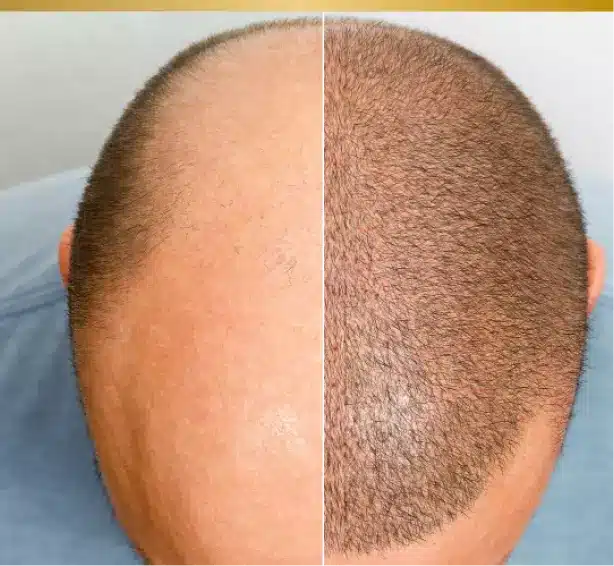
Evolution of hair transplantation
by Klineva
Post-transplant progression for beard & hair
Month-by-month evolution of a Hair Transplant
Every hair transplant is unique, and stages may vary in length between individuals. Because the entire process can be stressful and daunting, we invite you to visualize different progressions from our Klineva patients!
*Important reminder: Each regrowth is different, and timelines vary between stages. Final results are always observed at 1 year post-hair transplant / 8 months for beard.*
FUE Sapphire transplant progression month-by-month
Before
D+1 post-hair transplant
D+15 post-hair transplant
2 months post-hair transplant
4 months post-hair transplant
8 months post-hair transplant
0%
100%
DHI transplant progression month-by-month
Before
Hair implantation D-day
D+15 post-hair transplant
2 months post-hair transplant
5 months post-hair transplant
18 months post-hair transplant
Immediately after the hair transplant
Post-transplant, mild discomfort, minimal bleeding, or scalp bruising are normal. We provide precise instructions on medications and care for treated areas. We’re also available to address all concerns.
First days of recovery after hair transplant
During the first few days after the transplant, it is important to rest and follow the instructions given by the surgeon. You should avoid strenuous physical activity, prolonged exposure to the sun and anything that might touch or rub the grafted areas. It is also recommended that you sleep on your back with your head elevated. We'll give you everything you need to make the experience comfortable.
Healing phase post-hair transplant
As days pass, your scalp heals. Scabs around implanted follicles shed naturally in 1–2 weeks. It is important not to scratch/pick them to prevent infection or poor healing.
The hair regrowth phase
After the healing period, the transplanted hair will start to fall out. Don't worry, this is completely normal (see our article on shock-loss) Approximately two to three months after the transplant, new hair will begin to grow from the implanted follicles. Hair growth will be gradual and the final results can be appreciated after 12 months (some see good results earlier).
During the hair regrowth phase, it is important to follow our surgeon's instructions for the care and maintenance of your new hair. You should use paraben-free hair care products (e.g. the Growth Factor or Medichair used at the clinic), avoid colouring or harsh chemical treatments and take extra precautions to protect your scalp from sun and trauma. We'll also provide you with specific washing instructions, which you should follow to the letter. We also recommend reading our ultimate guide 2024 post hair transplant care
Photo gallery FUE Saphir implants, DHI, DHI without shaving, beard, before and after
DHI hair implant operation
Before
Hair implantation D-day
D+15 post-hair transplant
3 months post-transplant D.H.I.
5 months post-hair transplant
18 months post transplant dhi
0%
100%
Infos
Beard transplant operation
Before
1 month post beard transplant
3 months post beard transplant
6 months post beard transplant
8 months post beard transplant
10 months post beard transplant
0%
100%
Infos
Women's no-shave transplant operation
Before
D+7 post-hair transplant
1 month post-hair transplant
5 months post-hair transplant
6 months post-hair transplant
10 months post-hair transplant
0%
100%
Infos
Operation DHI
Before
1 month post-hair transplant
2 months post-hair transplant
4 months post-hair transplant
5 months post-hair transplant
15 months post-hair transplant
0%
100%
Infos
Operation FUE Saphir
Before
D+15 post-hair transplant
2 months post-hair transplant
4 months post-hair transplant
10 months post-hair transplant
18 months post-hair transplant
0%
100%
Infos
Operation FUE sapphire
Before
D+15 post-hair transplant
2 months post-hair transplant
4 months post-hair transplant
8 months post-hair transplant
0%
100%
Infos
Similar questions
Are there any side effects after a hair transplant?
Common side effects are mild. In some cases, a little discomfort may occur: a few bruises and swelling, all of which are temporary. These disappear rapidly in the first few weeks. Your hair transplant specialist will write you a prescription to alleviate these effects if they occur.
How long before I start to see the results of a hair transplant?
Some people start to see results from hair transplants as early as 6 months post-op. But don't panic if this isn't the case for you. Don't forget that the final results can be seen between 12 and 18 months for a hair transplant and at least 8 months for a beard transplant.
How does a hair transplant progress month by month?
From 5th to 7th day At this stage, your grafts become more resistant and are no longer likely to fall out at the slightest touch (although you should avoid scratching yourself).
From 15th to 30th day After about two weeks, the scabs will gradually disappear. You will then see the start of shockloss, an expected and temporary phenomenon.
From 1st to 3rd month Hair loss: Often a source of concern because of the loss of transplanted hair, it is important to remain patient. By the end of the 3rd month, the hair will start to grow back.
4th to 6th month From the 4th month, hair growth accelerates. Around the 6th month, you will already see partial but noticeable results, and the graft will be virtually undetectable.
From the 6th to the 12th month The density and volume of your transplanted hair will continue to increase.
From the 12th to the 18th month After one year, the final result will almost be achieved. For the frontal area, the final result is generally visible after 18 months, while for the back of the skull, it will take around two years.

Can I do sport after a hair transplant?
Yes, but not just yet! Otherwise you risk compromising the hair transplant! It is advisable to avoid all physical activity for at least 15 days after the transplant. Sport can damage the grafts. Don't hesitate to ask during your follow-up and find out more on our article " Sport and hair transplants: recommendations before and after the operation "
Is it normal to feel itchy after a hair transplant?
Yes, it's normal to feel itchy after a hair transplant. It's part of the healing process. Avoid scratching vigorously and consult your surgeon for recommendations on soothing products.
Should I use specific products for my transplanted hair?
We will give you recommendations on the hair care products to use. In general, however, we recommend using gentle, paraben-free products that are suited to your hair type.
Contact us
Do you have a question? Need some information?
Would you like a free, personalised 100% medical diagnosis?