

Discover our
Hair Transplant FAQ

All you ever asked

FAQ Hair transplant

FAQ about hair transplants

Hair transplants are possible from the age of 18 to 70. However, it is preferable to have a hair transplant when baldness has stabilised. Read our article on this subject here

With proper care, no! Transplanted hair is harvested from the back of the scalp (the "permanent hair" crown zone). These follicles are genetically resistant to shedding. Grafts from this area retain their genetic code and maintain this resilience for life. Temporary "shock loss" may occur weeks post-op. Don’t panic! This is completely normal. Grafts will regrow following regular hair cycles

No. Women can also have a hair transplant to adress alopecia. We recommend that you read our page on hair transplants for women. here and the shaving-free grafting technique here because it's often harder to accept shaving when your hair is long.  

Hair implantation methods Sapphire FUE, DHI methodand DHI without shaving leave no postoperative marks.

The 1st results generally appear after 6 months. However, it takes 1 - 1 1/2 years for the final results to be visible. Everyone's rhythms are different, so we encourage you to have a look at our hair transplant and beard transplant results. here.

It's so easy! Just call us on +90 536 612 7903 (via the WhatsApp application), by e-mail to this address contact@klineva.com or by filling in the contact form at the bottom of the page. A member of our team will plan your stay for you.

No deposit required before arrival.
Payment can be made at the clinic by credit card (please allow 5% for bank charges) or in cash (in ?uros).

Thanks to sedation post-anesthesia, the procedure is painless during and after surgery. Mild temporary discomfort may occur during recovery.

Our advice for visiting Istanbul is to come in spring (March to May) or autumn (September to November), when the climate is mild and pleasant, with fewer tourists than in summer. Paradoxically, summer is perhaps the best time to have a hair transplant. The latest studies show that blood circulation, including that of the scalp, is amplified by the heat, leading to faster recovery in the event of a hair transplant. Find out how to prepare for your trip to Turkey with our article

The currency used in Turkey is the Turkish lira, which is worth around 30TL to 1 Euro (July 2023). You can change euros at bureaux de change, banks or hotels, or withdraw Turkish lira from cash dispensers. Our advice is to use exchange offices outside the airport to get a better price.

Can any type of hair be transplanted?

Yes, we do transplants any type of hair (fine, thick, curly, frizzy). However, you need to know how to manage the different types of grafts. At Klineva, our team has the necessary experience to carry out a transplant on any type of hair.

When can I cut my hair after a transplant?

In general, we advise to wait at least 3 months before making a first haircut to allow the grafts to develop and take root. However, this period can sometimes be reduced to 1 or 2 months depending on the patient and how quickly the grafted hair grows.

Does the donor area grow back after a hair transplant?

Yes, hair will grow back in the donor area after a hair transplant. However, it is important to note that grafts taken from the donor area will not grow back. The donor area is estimated to provide between 6,000 and 9,000 grafts maximum over the course of a lifetime, so take care of it. 

What shampoo should I use after a hair transplant?

Once you've given your hair a new lease of life with a transplant, it's a good idea to avoid hair products that are a little too harsh, such as dyes packed with chemicals or formulas containing harmful ingredients. For a tailor-made recommendation on post-transplant hair care, why not take a look at your hair transplant specialist? At Klineva, we're partial to paraben-free products, and we love formulas that are packed with nutrients to pamper your scalp, such as our little favourites, the products in the Growth Factor. Don't hesitate to give your hair all the comfort it deserves!

Why do people lose their hair?

androgenetic alopecia

Androgenetic alopecia


The most common form of baldness in men is due to dihydrotestosterone (the male hormone) acting on the hair follicles at the top of the head, which are genetically sensitive. Female alopecia often occurs after a major hormonal change (childbirth - menopause) or a thyroid disorder. Anything that reduces female hormones and increases the presence of androgens.

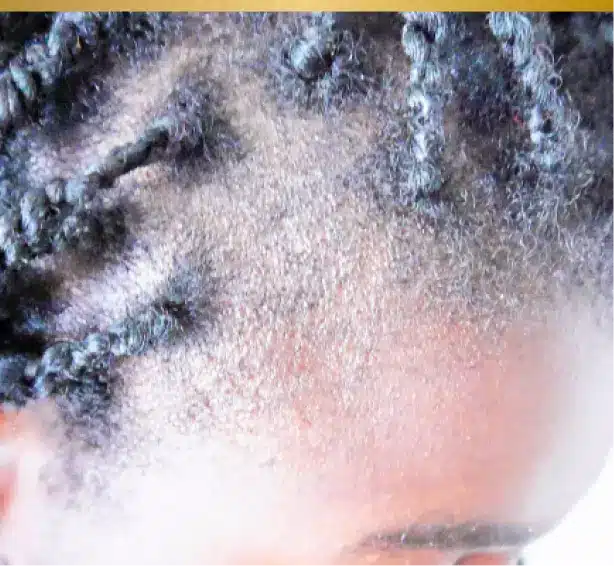
traction alopecia

Traction alopecia


It occurs with excessive hair pulling or in people suffering from trichotillomania. Continuous pulling weakens the hair follicles until they fall out. Hair loss can be permanent. It is much more prevalent in women than in men, and particularly in Afro hair because of the way the hair is woven.

alopecia

Pelade


Equally common in men and women, alopecia is hair loss in round patches. It is an autoimmune disease, the exact causes of which are not yet fully understood.

To find out more about the different types and causes of hair loss, read the article here

How far has your hair loss progressed?

What are the Norwood and Ludwig scales?


The Norwood scale is a visual measure used to assess the different stages of hair loss in men. The aim of measuring this progression is to suggest the right treatment for each stage (stage I to VII) of your alopecia. The quantity and density of hair are assessed more specifically on two areas of the scalp:

- In the gulfs: temporal (temples) and frontal (upper part of the head) ;\
- At the vertex (top of the head).

norwood baldness scale

Norwood scale %

For Women, the Ludwig scale is used, as their hair loss does not manifest itself in the same way. 

For full details, see our article on the subject here

Contact us

Do you have a question? Need some information?
Would you like a free, personalised 100% medical diagnosis?


    For the doctor's diagnosis, please send us 5 photos of you (front-back-left-right-top). Accepted formats .jpeg.png.jpg.pdf and .gif

    Send us a message via the WhatsApp*
    at +90 536 612 7903
    *WhatsApp is a free mobile application that lets you send messages / text messages abroad free of charge.

    Send us an e-mail : contact@klineva.com

    Trump Towers, Mecidiyeköy Yolu Cad. No:12 D: 2805, Kuştepe 34381 Şişli / İSTANBUL

    Why do people lose their hair?

    androgenetic alopecia

    Androgenetic alopecia


    The most common form of baldness in men is due to dihydrotestosterone (the male hormone) acting on the hair follicles at the top of the head, which are genetically sensitive. Female alopecia often occurs after a major hormonal change (childbirth - menopause) or a thyroid disorder. Anything that reduces female hormones and increases the presence of androgens.

    traction alopecia

    Traction alopecia


    It occurs with excessive hair pulling or in people suffering from trichotillomania. Continuous pulling weakens the hair follicles until they fall out. Hair loss can be permanent. It is much more prevalent in women than in men, and particularly in Afro hair because of the way the hair is woven.

    alopecia

    Pelade


    Equally common in men and women, alopecia is hair loss in round patches. It is an autoimmune disease, the exact causes of which are not yet fully understood.

    To find out more about the different types and causes of hair loss, read the article here

    en_GB
    Got a question? We'll be in touch!

    We look forward to hearing from you. Fill in the form and we'll get back to you as soon as possible.